


You’re receiving this email either because you registered for the Strike Marketing Summit or because you subscribed previously to the Strike Marketing newsletter.
Why do most founders fail at business?
If I asked that question at a dinner party - or on LinkedIn - I’m guessing most people would answer the same way: bad execution.
They moved too slowly.
They didn’t ship.
They overthought things.
They didn’t hire the right people.
That answer sounds right. It’s also wrong.
Most founders don’t fail because they executed poorly. They fail because they executed really well… on the wrong thing.
They ran marketing before they understood the market.
They focused on the wrong problem (or maybe they didn’t even focus on the problem at all - just the solution! I’m working with a founder who doesn’t want to solve problems. He just wants to offer a solution).
They optimized tactics within an existing category they had chosen by default.
Once you see that pattern, you can’t unsee it.
That’s why we opened the Strike Marketing Summit the way we did. Not with growth hacks, AI tools, or even summits.
We started with category design.
Why marketing is where everyone starts (and why it’s a trap)
Here’s the default sequence I see over and over again: We have a product. We need leads. We need marketing.
I get it. It feels logical. But it’s also backward.
Marketing answers important questions: How do we get attention? How do we explain what we do? How do we generate demand?
But it doesn’t answer the first-order questions that determine whether any of that will work: What market are we actually in? What problem are we naming? Why should this category exist at all?
Those aren’t marketing questions. They’re business strategy questions.
If you skip them, the market will happily answer them for you. And when it does, you usually get slotted into an existing category where:
You’re compared to incumbents
Your differentiation collapses into features
Growth turns into a pricing and attention war
At that point, “better marketing” won’t save you.
Category design is not a marketing tactic
I was so happy when panelists Kevin Maney and Mike Damphousse made this point in the opening panel of the Strike Marketing Summit.
They tackled the biggest misconception people have of Category design: that marketing is messaging, or positioning, or even branding. Those things come after.
Category design is the strategic decision about:
What problem matters
Who it matters to
And how the market should think differently because you exist.
As Kevin Maney explained during the first session, categories live in the mind. If the category doesn’t exist, customers literally don’t know how to choose you. And if it exists on someone else’s terms, you’ll always be measured against the wrong yardstick.
Marketing operates inside a category. Category design determines the category itself.
Why we opened the summit with this conversation
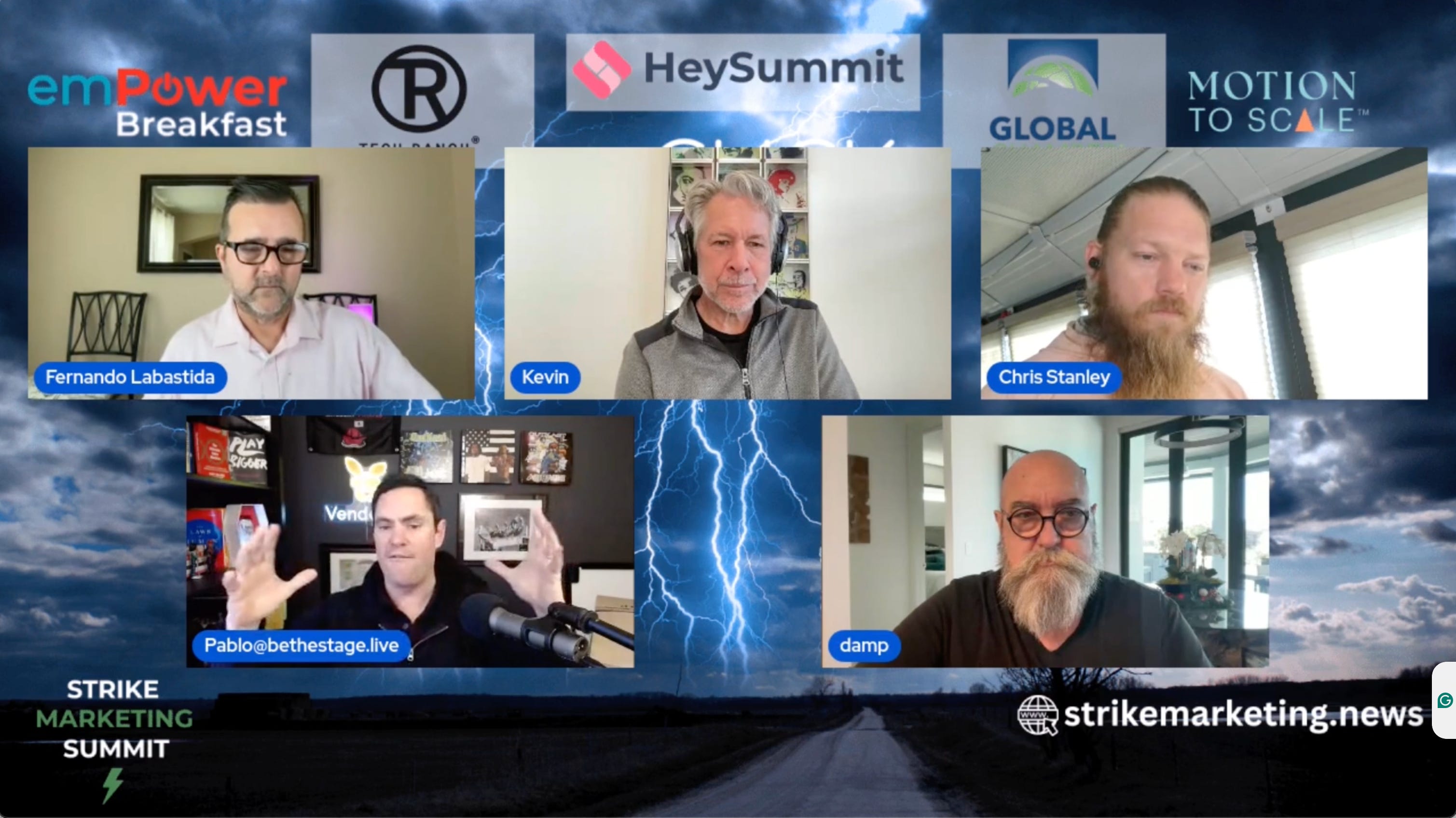
I opened the first session of the summit with the Category Design panel featuring:
Kevin Maney
Mike Damphousse
Chris Stanley
Pablo Gonzalez
…and me, tying the discussion back to Strike Marketing and founder-led category creation
Each speaker had different backgrounds, different use cases, different points of view.
But we all came to the same conclusion: If you don’t design the category, you inherit one. And inherited categories come with inherited constraints.
The inversion most founders struggle with
One of the most important ideas from the panel was also the one most founders resist at first. We’re all taught to chase product–market fit.
But that framing assumes the market already exists, the problem is already clearly defined, and your job is to wedge your product into it.
Category designers flip that logic.
They start with: market → problem → product
They ask:
What’s changing in the world?
What’s now missing because of that change?
What kind of solution becomes possible now that wasn’t before?
Only then does the product make sense.
The Category Creation Formula
During the panel, Kevin and Mike walked through what they call the Category Creation Formula: Context → Missing → Innovation
Let me break it down for you.
Context. What has changed: Technology, behavior, economics, expectations.
Missing. That problem exists because of that change.
Innovation. What new approach makes solving that problem possible?
Most companies get this wrong by starting with the innovation and working backward. They build something impressive, then scramble to invent a problem it supposedly solves.
That almost never leads to category leadership.
Language is not branding
Another theme that came up repeatedly was language. Marketers sometimes confuse this with copywriting or slogans.
It’s none of those. Language is actually vocabulary, or languaging as Category Designers like to call it.
Categories spread when people start repeating the problem and the framing in using the languaging category designers introduce. When you see unprompted conversations on social media, or hear it at a conference, and they’re using your languaging…you know you’ve won.
As Pablo Gonzalez pointed out, categories don’t spread because of titles. They spread because of repeatable lines, phrases that feel obvious once you hear them.
That’s how ideas move from interesting to obvious to inevitable.
Why category design feels slow (until it isn’t)
One of the reasons founders abandon category design too early is that it doesn’t look like progress at first. You’re naming problems. Testing language. Tefining point of view. Educating instead of selling.
Then, almost suddenly prospects show up already aligned with your category. Competitors start borrowing your words. The market snaps into focus.
Your category is starting to gain momentum, and you feel like all that hard work you did is finally paying off.
That’s also why category design can’t be delegated (only shepherded). It’s not a marketing task. It’s a leadership decision.
Why this matters right now
Two forces make category design unavoidable today.
First, speed. AI and automation compress execution advantages. Strategy lasts longer.
Second, noise. Everyone can publish. Very few can frame.
In that environment, the winners aren’t the loudest companies. They’re the clearest ones.
And clarity doesn’t come from campaigns. It comes from deciding what category you stand for, and committing to it.
Watch the panel
The opening Category Design panel was actually the most popular session of the summit. The nuance, the debate, the lived experience of people who’ve designed categories as founders, advisors, and operators.
If you’re building a company, a product, or a second-act business - and you want to understand why category design comes before marketing - I strongly recommend watching the session.
Everything else in the summit builds on this foundation.
And that was very much intentional.


