

Are you an improver or an innovator?
Why "improver vs innovator" is the wrong debate

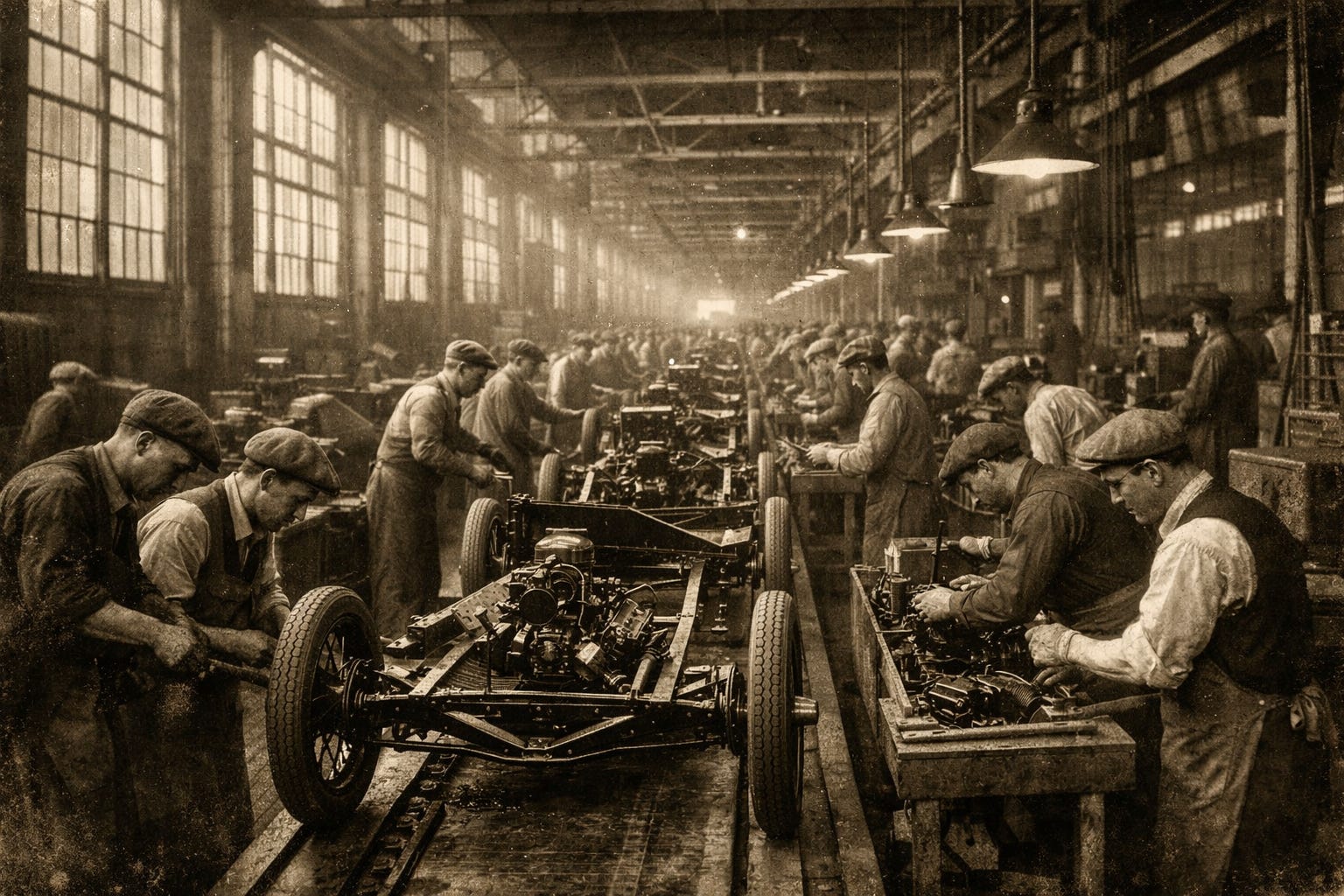
A few weeks ago I was making the case for category design to a sharp, successful founder I’ve been talking with about repositioning his company.
He stopped me mid-pitch with what I’ve started calling “The Ford Argument.”
“Fernando,” he said, “Henry Ford didn’t invent the car. He improved it with the assembly line. Why can’t I just be a better version of what already exists?”
It’s a reasonable objection.
It’s also based on a misreading of what Ford actually did.
The Ford Story Everyone Gets Wrong
Before Ford, cars were luxury items. Hand-built. Expensive. Associated with a tiny wealthy elite who had the money and the mechanical know-how to keep them running.
Ford didn’t walk into that category and try to beat Rolls-Royce on craftsmanship. He didn’t try to make a better luxury car.
He asked a completely different question: what if a car wasn’t a luxury item at all?
That question created a new category — affordable personal transportation for everyday American families — and Ford owned it completely. He didn’t improve the existing category. He made it irrelevant for 90% of the market by designing a new game with different rules. Rules that happened to favor him.
The assembly line was the innovation.
The category was the strategy.
The Test I Use to Know If You’ve Actually Done It
Here’s how I tell the difference between real category design and really good rebranding:
If your company disappeared tomorrow, would the category still exist?
Tiff’s Treats started delivering warm cookies to people’s doors in Austin in 1999. (The idea: what if cookies worked like pizza delivery?) Today, Crumbl, Insomnia Cookies, and hundreds of local copycats operate in that same space - with or without Tiff’s. The category escaped the founder. That’s how you know it’s real.
Alli Webb started doing blowouts in her clients’ homes for $40 in 2008. Not cuts. Not color. Just blowouts. She had seen an existing service and asked: what if that was all you did? She created the blowout bar category, sold the company for $255 million, and blowout bars now exist in every major city with no connection to her whatsoever.
Joe Pulizzi - who was a salesperson at a B2B publishing company called Penton Media when he coined the term - named “content marketing” in 2007. He’s since stepped back from the Content Marketing Institute he built. The industry, with its own conferences, its own job titles, and nine-figure budgets inside Fortune 500 companies, marches on without him.
Tiff’s started in a dorm room. Alli started in her clients’ kitchens. Pulizzi started with a blog.
None of them invented a technology. None of them needed VC money to start.
What This Has to Do With Yesterday’s Email
(Quick note in case you missed it: yesterday I wrote about your zone of genius. In the article I told the story about a class I taught via Zoom to 14 small business owners in Mérida, Yucatán, and how we surfaced the hidden categories inside their businesses live on the call.)
The corporate education company in that class didn’t just offer better training programs. They were actually designing a category called “Corporate Education Retention” - the only company built by psychologists specifically to solve the dropout problem, not just fill seats.
The plant nursery wasn’t just selling exotic plants. She was designing a “Plant Adoption Center” - the place where you don’t just buy a plant, you adopt one, and the store educates you post-sale to make sure it survives.
Neither of those founders thought of themselves as innovators. Both of them thought they were just doing their job a little better than the person down the street.
They weren’t improvers. They were category designers who hadn’t named what they were doing yet.
The Real Answer to the Ford Argument
The improver vs. innovator debate is a false binary. The best category designers in history were both - they used existing tools in a completely new way:
The assembly line existed before Ford.
Touchscreens existed before the iPhone.
The internet existed before Amazon.
Food delivery existed before Tiff’s Treats (Domino’s….helloooo?).
Category design isn’t about inventing something from scratch. It’s about seeing the space in people’s minds that doesn’t exist yet - and being the first one to name it.
So here’s the question I’ll leave you with today: what space are you naming?
Because if you’re still trying to be the best version of something that already exists, you’re playing someone else’s game with someone else’s rules.
And in a world where AI can produce a thousand “improved” versions of anything by next Tuesday, “better” is not going to be enough.
I’m running a live webinar next Tuesday, March 31st at 12 PM CST. The first session is about why cold outbound is dying — and what’s replacing it.
The whole series, though? It’s really about this: how to stop competing in categories you can’t win, and start designing the one you can own.